
Mostrar mensagens com a etiqueta Rob Kitchin. Mostrar todas as mensagens

30.3.10

o advento das comunidades digitais


(pintura de patrick heron, "still life with red jug", 1947)


"In the second instance, it is contended that individuals are exploiting the flexibility and fluidity of cyberspace to forge new communities - new social networks that are centered upon what they think, say, believe and are interested in. As such, some suggest that one of the principal effects of cyberspace is the formation of communities that are free of the constraints of place and are based upon new modes of interaction and new forms of social relationships. Instead of being founded on geographic propinquity, these communities are grounded in communicative practice. Here, individual participants can circumvent the geographical constraints of the material world and take a more proactive role in shaping their own community and their position whitin it, although (just like geographic communities) such online communities have behavioral norms, differing personalities, shared significance, and allegiances" (1)

martin dodge e rob kitchin


(1) DODGE, Martin e KITCHIN, Rob - Atlas of cyberspace [Em Linha]. Pearson Education Ltd, 2001. [Consult. 08 Mar. 2010 02.05]. Disponível em http://personalpages.manchester.ac.uk/staff/m.dodge/atlas/Atlas_with_cover_low.pdf. ISBN 0-201-74575-5. p. 154.

27.3.10

a manipulação da identidade no ciberespaço


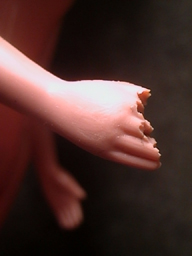
(imagem de boneco de shelley jackson e pamela jackson, "jenny", 2001)


"In the first instance, analysts suggest that cyberspace allows individuals to explore their identity by changing the conditions under which identity is constructed and expressed. Cyberspace achieves this by providing a space of disembodiment and dislocation, because interaction is conducted through a medium that strips away body codings (e.g. age, gender, race) and geographic place and community. In other words, in cyberspace a person's identity is defined by words and actions, not body and place. In cyberspace, some commentators contend, your body is irrelevant and invisible and nobody need know your race, disability, gender, sexuality, material wealth, or geographic location unless you choose to reveal it. This stripping away, it is hypothesized, allows individuals to experiment with aspects of their identity that they would otherwise conceal" (1)

martin dodge e rob kitchin


(1) DODGE, Martin e KITCHIN, Rob - Atlas of cyberspace [Em Linha]. Pearson Education Ltd, 2001. [Consult. 08 Mar. 2010 01.00]. Disponível em http://personalpages.manchester.ac.uk/staff/m.dodge/atlas/Atlas_with_cover_low.pdf. ISBN 0-201-74575-5. p. 154.

18.3.10

o poder da cartografia


(pintura de jean dubuffet, "cert-volant le digite", 1969)


"It has long been recognized that mapping is a process of creating, rather than revealing, knowledge. Throughout the process of creation, a large number of subjective - often unconscious - decisions are made about what to include and what to exclude, how the map will look, and what the map is seeking to communicate. In other words, a map is imbued with the values and judgements of the people who construct it. Moreover, they are undeniably a reflection of the culture and broader historical and political contexts in which their creators live. As such, maps are not objective, neutral artefacts but are constructed in order to provide particular impressions to their readers." (1)

martin dodge e rob kitchin


(1) DODGE, Martin e KITCHIN, Rob - Atlas of cyberspace [Em Linha]. Pearson Education Ltd, 2001. [Consult. 23 Fev. 2010 03.17]. Disponível em http://personalpages.manchester.ac.uk/staff/m.dodge/atlas/Atlas_with_cover_low.pdf. ISBN 0-201-74575-5. p. 3.