
Mostrar mensagens com a etiqueta Novas Tecnologias. Mostrar todas as mensagens

30.3.10

o advento das comunidades digitais


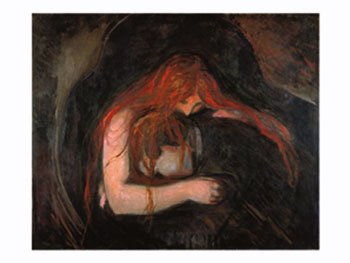
(pintura de patrick heron, "still life with red jug", 1947)


"In the second instance, it is contended that individuals are exploiting the flexibility and fluidity of cyberspace to forge new communities - new social networks that are centered upon what they think, say, believe and are interested in. As such, some suggest that one of the principal effects of cyberspace is the formation of communities that are free of the constraints of place and are based upon new modes of interaction and new forms of social relationships. Instead of being founded on geographic propinquity, these communities are grounded in communicative practice. Here, individual participants can circumvent the geographical constraints of the material world and take a more proactive role in shaping their own community and their position whitin it, although (just like geographic communities) such online communities have behavioral norms, differing personalities, shared significance, and allegiances" (1)

martin dodge e rob kitchin


(1) DODGE, Martin e KITCHIN, Rob - Atlas of cyberspace [Em Linha]. Pearson Education Ltd, 2001. [Consult. 08 Mar. 2010 02.05]. Disponível em http://personalpages.manchester.ac.uk/staff/m.dodge/atlas/Atlas_with_cover_low.pdf. ISBN 0-201-74575-5. p. 154.

27.3.10

a manipulação da identidade no ciberespaço


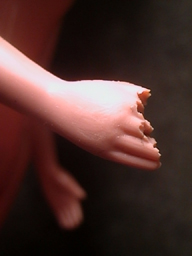
(imagem de boneco de shelley jackson e pamela jackson, "jenny", 2001)


"In the first instance, analysts suggest that cyberspace allows individuals to explore their identity by changing the conditions under which identity is constructed and expressed. Cyberspace achieves this by providing a space of disembodiment and dislocation, because interaction is conducted through a medium that strips away body codings (e.g. age, gender, race) and geographic place and community. In other words, in cyberspace a person's identity is defined by words and actions, not body and place. In cyberspace, some commentators contend, your body is irrelevant and invisible and nobody need know your race, disability, gender, sexuality, material wealth, or geographic location unless you choose to reveal it. This stripping away, it is hypothesized, allows individuals to experiment with aspects of their identity that they would otherwise conceal" (1)

martin dodge e rob kitchin


(1) DODGE, Martin e KITCHIN, Rob - Atlas of cyberspace [Em Linha]. Pearson Education Ltd, 2001. [Consult. 08 Mar. 2010 01.00]. Disponível em http://personalpages.manchester.ac.uk/staff/m.dodge/atlas/Atlas_with_cover_low.pdf. ISBN 0-201-74575-5. p. 154.

28.2.10

a visão de tim berners-lee


(escultura de alexander calder, "plutôt jaune", 1965)


"Berners-Lee's original vision of the WWW was of a sea of interactive shared knowledge, in which our computers are memexes whose knowledge base exists in cyberspace rather than microfilm. He presented a vision of the «great brain», as he calls it, as a living organism, a vision that conveyed an oscillating analog/digital sense of the dynamic, interactive information continuum that is the Net and its users" (1)

rosemary simpson [et al.]


(1) SIMPSON, Rosemary, e outros - 50 years after «As we may think» : the Brown/MIT Vannevar Bush Symposium [Em Linha]. Providence: Brown University, 1996. [Consult. 13 Fev. 2010 17.24]. Disponível em http://www.cs.brown.edu/memex/Bush_Symposium_Interact_2.html#As%20We%20May%20Think

18.1.09

o fim do livro?


(exemplos de varios incunabula, retirados daqui).


"Landow (1996) writes, «We find ourselves, for the first time in centuries, able to see the book as unnatural, as a near-miraculous technological innovation and not as something intrinsically and inevitably human« (p.25). For hundreds of years, the book and the printed word had been taken for granted as part and parcel of our social and sociological worlds. In recent memory, our society had never known anything other than a book - and paper-influenced experience, so there was no reason, and, possibly, little critical means, for viewing the book as something fundamentally innovative and «other». With the advent of the networked computer, however, the biases and the specificity of the medium of paper are thrown into relief. This is so because the networked computer, like the book, contains built-in
assumptions and biases that influence the scholarly activities we can carry out (...)" (1)

valerie l. worthington e yong zhao


(1) WORTHINGTON, Valerie L. e YONG, Zhao - Does Your Duck Quack? Demonstrating Scholarly Savvy in the Age of the Networked Computer. [Em Linha]. [Consult. 18 Jan. 2009]. Disponível em: https://www.msu.edu/~worthi14/duck.html


este texto de valerie l. worthington e yong zhao dá que pensar na medida em que o livro impresso, tal qual o conhecemos, é relativamente recente na história da humanidade. desenvolvida por gutenberg, a técnica da impressão em caracteres móveis apenas foi desenvolvida no século XVI, depois de um longo período onde predominaram os códices em pergaminho. assiste-se, por isso, agora, a uma nova revolução: o livro virtual, a internet, as novas tecnologias.